


Tyre Blowout in Dubai Summer? 7 Causes, Prevention Tips and What to Do Immediately
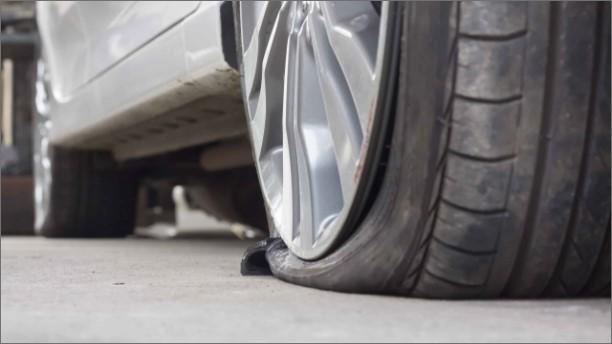
You are on Sheikh Zayed Road at 120 km/h. Suddenly there is a loud bang, the steering wheel pulls violently to one side, and the car begins to shake. You have just had a tyre blowout.
In those first three seconds, most drivers make the wrong instinctive decision — they brake hard. That reaction can cause the car to spin. A tyre blowout at highway speed in Dubai is a genuine life-threatening emergency, and how you respond in the first few seconds determines the outcome.
This guide covers why tyre blowouts are significantly more common in Dubai than in most other cities, how to inspect your tyres before a blowout happens, what to do immediately if one occurs, and the legal consequences of driving on unsafe tyres in the UAE.
If your tyres are showing warning signs right now and you need help at your location, call us on +971 52 436 3900. We come to you with replacement tyres across Dubai, 24 hours a day.
Why Dubai Summer Is So Destructive to Tyres
Most tyre manufacturers test and rate their products for ambient temperatures between 20°C and 35°C. Dubai’s summer conditions are categorically different.
Air temperatures above 45°C are common from June through September. Road surface temperatures on Dubai’s asphalt highways regularly reach 70°C during peak afternoon hours — hot enough to accelerate rubber degradation, soften tyre compound, and significantly increase internal tyre pressure. Under-bonnet temperatures in parked vehicles can exceed 80°C, and tyres absorbing direct radiation on sun-exposed road surfaces operate at temperatures well above what their construction was designed to sustain continuously.
The result is a city where tyre blowout risk is substantially higher than in temperate climates, where tyre lifespan is shorter than manufacturer estimates suggest, and where the consequences of driving on old or marginal tyres are far more serious than most drivers recognise.
7 Common Causes of Tyre Blowouts in Dubai
Heat-Induced Over-Inflation
Air inside a tyre expands as temperature increases. Tyre pressure rises by approximately 1 PSI for every 5.5°C increase in temperature. A tyre correctly inflated at 32 PSI in an air-conditioned parking structure at 25°C will reach approximately 38 to 40 PSI after sitting in direct Dubai sun for two to three hours at 45°C ambient temperature.
When internal pressure exceeds the tyre’s structural capacity — particularly in a tyre already weakened by age or damage — the result is a sudden explosive decompression. This is the most common cause of the blowouts that happen on Dubai’s highways in the afternoon after vehicles have been parked outdoors during working hours.
The critical implication is that tyre pressure should always be checked when the tyre is cold — before driving — not after the car has been sitting in the sun. A reading taken on a hot tyre in Dubai summer conditions is not an accurate baseline.
Under-Inflation
Under-inflation is counterintuitively one of the most common causes of blowouts. When a tyre is under-inflated, the sidewalls flex excessively during rolling — generating internal heat through friction. In Dubai’s ambient heat, this additional heat generation pushes already-warm tyres beyond their thermal tolerance.
Under-inflated tyres also have increased rolling resistance, wear unevenly on the outer edges of the tread, and are more vulnerable to impact damage from road debris and kerb strikes. A tyre running 5 to 10 PSI below its recommended pressure is generating significant additional heat with every kilometre driven — heat that accumulates until the tyre fails.
Tyre Age Beyond Safe Limits
Rubber degrades from the inside out. A tyre can appear visually acceptable on the surface while the internal rubber has become brittle, cracked, and structurally compromised from years of heat cycling. In Dubai’s climate, this internal degradation happens significantly faster than in cooler environments.
The UAE has specific regulations addressing this risk. Dubai’s Roads and Transport Authority bans tyres over five years old from road use. Additionally, vehicles presented for registration renewal with tyres over two years old may face scrutiny on tyre condition. In 2024, over 37,900 drivers were fined in Dubai for unsafe or worn tyres.
An ageing tyre in Dubai is not just a performance concern — it is a legal issue and a documented safety hazard.
Physical Damage From Road Debris and Potholes
Dubai’s constant construction activity across new developments in Dubai South, Al Furjan, Jebel Ali, and Dubai Silicon Oasis leaves road debris — nails, screws, sharp aggregate, and metal fragments — on surrounding roads for extended periods. A small nail creates a slow puncture that eventually leads to enough pressure loss to cause dangerous under-inflation and eventual sidewall failure.
Potholes on older road sections in Deira, Bur Dubai, Al Karama, and some industrial zones cause sudden impact loads on tyres at speed — particularly damaging to the tyre sidewall, which can develop internal structural damage that is invisible from the outside but causes sudden blowout failure days or weeks later.
Overloading the Vehicle
Every tyre has a maximum load rating — the maximum weight it can support safely at its rated inflation pressure. Overloading a vehicle beyond the combined tyre load rating causes excessive heat generation in the tyres, accelerated wear, and significantly increased blowout risk at highway speeds. This is particularly relevant for SUVs and pickup trucks used for transporting materials or goods where drivers may not consider the tyre load implications of a full load at 120 km/h.
Poor Quality or Counterfeit Tyres
Counterfeit and substandard tyres are a documented problem in parts of the UAE market. These tyres may be visually indistinguishable from genuine products but use inferior rubber compounds, inadequate internal reinforcement, and incorrect construction that does not meet the rated load or speed specifications printed on the sidewall. They are disproportionately represented in tyre blowout incidents because they fail at loads and temperatures that a genuine equivalent tyre would handle without issue.
Lack of Regular Maintenance and Inspection
A tyre deteriorates gradually — sidewall cracks develop, tread wears unevenly, pressure drops slowly. None of these individually trigger an immediate blowout, but each one reduces the margin of safety until a combination of factors — a hot afternoon, a pothole, a fully loaded vehicle — tips the tyre into failure. The majority of Dubai tyre blowouts are preventable with routine inspection and maintenance.
How to Read Your Tyre’s Age — The DOT Code
Every tyre sold legally has a DOT code moulded into the sidewall. The last four digits of this code tell you exactly when the tyre was manufactured.
The first two digits are the week of manufacture. The second two digits are the year. A tyre marked 2419 was manufactured in the 24th week of 2019 — making it over six years old and illegal for road use in Dubai under RTA regulations.
Check this code on all four tyres, including the spare. Many drivers discover that a tyre installed as new several years ago has been sitting in a warehouse for years before being sold, making it older than the purchase date suggests. Any tyre showing a manufacturing date of five or more years ago should be replaced immediately regardless of apparent visual condition.
How to Inspect Your Tyres — Step by Step
Perform this inspection monthly and before any long drive or family trip.
Check Tread Depth
The legal minimum tread depth in the UAE is 1.6mm. A practical way to check without a gauge is the 1 AED coin test — insert a 1 AED coin into the tread groove. If you can see the silver outer ring of the coin above the tread surface, the tread is at or below the legal minimum and the tyre must be replaced.
Tread below 3mm in Dubai’s wet season conditions significantly reduces wet grip. Tread below 1.6mm is illegal and dramatically increases stopping distances on wet roads.
Inspect Sidewalls for Cracks, Cuts, and Bulges
Run your hand along the inner and outer sidewall of each tyre. Surface-level weathering cracks are minor but warrant monitoring. Cracks that penetrate visibly into the rubber structure are a red flag. Bulges or bubbles on the sidewall indicate internal structural damage — the tyre’s internal carcass has failed and the outer rubber is the only thing containing the air pressure. A bulge is a blowout waiting to happen at highway speed.
Check for Uneven Wear Patterns
Uneven wear indicates a mechanical issue that is consuming the tyre faster in one area. Wear on both outer edges with a centre ridge indicates chronic under-inflation. Wear only in the centre indicates over-inflation. Wear on one side only indicates wheel alignment or suspension issues. Address the underlying cause before replacing the tyre or the new tyre will wear the same way.
Look for Embedded Objects
Walk around the vehicle and inspect each tyre tread surface carefully. Nails, screws, and glass fragments embedded in the tread are common in Dubai near construction zones. A small embedded object may be maintaining tyre pressure temporarily — do not remove it without professional assistance as removal causes immediate rapid deflation.
Check Tyre Pressure When Cold
Check pressure before the first drive of the day, before the tyre has warmed from driving. Use the pressure specification on the sticker inside the driver’s door jamb — not the maximum pressure moulded on the tyre sidewall, which is the absolute maximum, not the recommended operating pressure.
Verify Tyre Age Using the DOT Code
Check the last four digits of the DOT code on each tyre as described above. Any tyre over five years old must be replaced under UAE regulations regardless of visual appearance.
If your inspection reveals any of these red flags and you need professional tyre inspection or replacement at your location, our emergency mobile tyre repair service in Dubai operates 24 hours a day. Call +971 52 436 3900 and we come to you with replacement tyres.
Red Flags — Do Not Drive on These Tyres
These conditions require immediate tyre replacement. Do not drive to a garage on a tyre showing these signs — call for mobile tyre assistance at your location.
Visible bulge or bubble on the sidewall
The tyre’s internal structure has failed. The bulge is the outer rubber containing air pressure that the damaged carcass can no longer hold. At highway speed this will fail catastrophically.
Cracks penetrating visibly into the sidewall rubber
Surface crazing is monitoring-level. Cracks you can see depth in are replacement-level. The internal carcass is exposed to moisture and further damage.
Tread depth below 1.6mm
Illegal in the UAE. Significantly reduced wet grip and hydroplaning risk. Replace immediately.
Tyre over five years old by DOT date
Banned from road use by RTA regulations. Internal rubber degradation is not visible externally but is structurally significant.
Visible cord or fabric showing through the tread or sidewall
The rubber has worn or been damaged through to the structural reinforcement. This tyre will fail without warning.
Repeated pressure loss without visible puncture
Indicates a bead seal leak, a failing valve stem, or an internal sidewall crack allowing slow pressure loss. All require professional assessment.
What to Do If a Tyre Blows Out on the Highway
The wrong instinct is to brake hard immediately. At 120 km/h, hard braking on a blown tyre causes the vehicle to spin. Follow this sequence precisely.
Grip the steering wheel firmly with both hands
The blowout will cause immediate pulling toward the affected tyre. Firm grip prevents loss of directional control. Do not overcorrect the steering.
Lift your foot off the accelerator gradually
Do not brake immediately. Allow the vehicle to decelerate through engine braking first. This maintains stability while speed drops to a manageable level.
Check traffic to your right and signal
Once you have stabilised the vehicle, check your mirror and blind spot, activate your indicator, and begin moving toward the hard shoulder or the nearest safe stopping point on the right side of the road.
Apply the brakes lightly once below 80 km/h
Light, progressive braking at reduced speed allows controlled deceleration to a stop without inducing a spin.
Stop fully on the hard shoulder and activate hazard lights
Once stopped safely, activate hazard lights immediately and if possible place warning triangles behind the vehicle — required by UAE law. Stay inside the vehicle if stopped on a live highway hard shoulder. Do not attempt to change a tyre on the hard shoulder of Sheikh Zayed Road, Emirates Road, or Al Khail Road.
Call for mobile tyre assistance
Our emergency mobile tyre service comes to your roadside location across Dubai 24 hours a day. Call +971 52 436 3900. Do not drive on the blown tyre even to the nearest exit — driving on a flat destroys the wheel rim and creates an additional hazard on a live carriageway.
Dubai-Specific Rules and Statistics You Should Know
Driving on unsafe tyres in Dubai carries specific legal consequences that most drivers are unaware of until they encounter them.
A Dh500 fine, four black points on the driving licence, and vehicle impoundment for one week is the penalty for driving on damaged or unsafe tyres in Dubai. In 2024, Dubai Police and RTA enforcement teams issued fines to over 37,900 drivers for unsafe tyre conditions — a figure that reflects how common the problem is and how actively it is being enforced.
Tyre-related failures account for approximately 5 percent of traffic fatalities in the UAE annually. On a network of highways where national speed limits reach 140 km/h, the consequences of a tyre blowout at speed are severe.
The RTA specifically bans tyres over five years old from road use in Dubai. Vehicles presented for registration renewal with tyres over two years old are subject to condition assessment. These regulations exist because the data on tyre-related fatalities in the UAE made the age-based deterioration risk impossible to ignore.
Prevention — How to Reduce Blowout Risk in Dubai
Check tyre pressure every week — when cold
In Dubai’s summer, pressure changes significantly with temperature. A weekly check before the first drive of the day, before the tyre has warmed from driving, is the single most effective prevention measure available. Takes three minutes.
Consider nitrogen inflation
Nitrogen molecules are larger than oxygen molecules and permeate through rubber more slowly — maintaining pressure more consistently over time. Nitrogen is also a dry gas, eliminating the moisture that contributes to internal rim corrosion and pressure variation with temperature changes. The pressure stability benefit is particularly valuable in Dubai’s extreme temperature range between air-conditioned parking and peak summer afternoon road temperatures.
Replace tyres proactively at three to five years or 40,000 to 80,000 km
Whichever comes first in Dubai’s conditions. Do not wait for visible tread wear to reach the legal minimum — internal degradation in Dubai heat reaches concerning levels before surface wear becomes obvious.
Avoid overloading your vehicle
Check your vehicle’s maximum load rating in the owner’s manual. For SUVs and pickup trucks used for carrying materials, calculate the load before driving — particularly before highway journeys.
Park in shade wherever possible
Reducing the peak temperature your tyres reach during the day reduces cumulative heat damage over a tyre’s lifespan. Underground and covered parking in areas like Business Bay, Downtown Dubai, and Dubai Marina genuinely extends tyre life compared to open outdoor parking.
Invest in quality tyres from reputable suppliers
The cost difference between premium and budget tyres is small relative to the repair cost, medical cost, or legal cost of a blowout at highway speed. Brands including Michelin, Bridgestone, Continental, Pirelli, and Goodyear are manufactured to standards that counterfeit and low-quality alternatives cannot meet.
Frequently Asked Questions
Why Are Tyre Blowouts More Common in Dubai Summer Than in Winter?
The combination of 45°C ambient temperature, 70°C road surface temperature, and extended parking in direct sun creates internal tyre pressures and rubber temperatures that significantly exceed what tyres experience in winter or in cooler climates. Heat accelerates rubber degradation, increases internal pressure, and reduces the margin between normal operating conditions and tyre failure. The majority of blowout incidents in Dubai occur between June and September, during peak afternoon hours when road surface temperature is highest.
How Do I Know When My Tyres Were Made?
Find the DOT code on the tyre sidewall — it is moulded into the rubber on either the inner or outer face of the tyre. Look for the letters DOT followed by a series of characters. The last four digits give you the week and year of manufacture. The first two digits are the week, the last two are the year. A tyre marked 1522 was made in the 15th week of 2022. Any tyre with a manufacturing date of five or more years ago must be replaced under RTA regulations.
Can I Drive Slowly on a Damaged Tyre to Reach a Garage?
No. Driving on a tyre with a bulge, visible structural damage, or after a blowout — even at walking pace — causes immediate and severe damage to the wheel rim and can cause the remaining tyre structure to separate from the rim entirely. The correct action is to call for mobile tyre assistance at your location. Our emergency mobile tyre service comes to you across Dubai 24 hours a day.
Does the UAE Have a Tyre Age Law?
Yes. The RTA bans tyres over five years old from road use in Dubai. Vehicles presented for registration renewal with tyres over two years old may also be subject to condition assessment. Driving on tyres that exceed the five-year age limit carries a Dh500 fine, four black points, and one week of vehicle impoundment.
What Tyre Pressure Should I Use in Dubai Summer?
Use the pressure specification on the sticker inside your driver’s door jamb — this is the manufacturer’s recommended cold inflation pressure for your vehicle. Check pressure before driving, before the tyre has warmed. Do not reduce pressure below this specification because you think the heat will cause over-inflation — running below specification causes dangerous under-inflation-related heat buildup. The recommended pressure already accounts for normal operating temperature increases.
Is Nitrogen Inflation Worth It in Dubai?
Yes, for most Dubai drivers. Nitrogen maintains more consistent pressure across temperature variations than air, which is approximately 21 percent oxygen. The dry nature of nitrogen also eliminates moisture inside the tyre that contributes to rim corrosion and micro-variations in pressure. In Dubai’s extreme daily temperature range between air-conditioned parking and peak summer road temperatures, the more stable pressure characteristics of nitrogen provide a genuine safety and maintenance benefit.
For tyre inspection and emergency replacement at your location, visit our emergency mobile tyre repair service page. If your car also will not start after being parked in the sun alongside a tyre issue, our guide on car not starting after parking in the sun in Dubai covers that diagnosis in full. For battery problems in Dubai heat, see our car battery dead in Dubai heat guide. For AC failure alongside summer driving concerns, our car AC not cooling in Dubai guide covers complete diagnosis. For engine overheating in Dubai traffic, read our car overheating in Dubai traffic guide. For a complete list of all services, visit our car repair services page or return to the Go Car Auto Services homepage.
Call Us: +971 52 436 3900 | WhatsApp Us
Go Car Auto Services — Emergency Mobile Tyre Repair Across All of Dubai, 24 Hours a Day


